
THE MAC REPORT-How I train for life.
An insiders guide to fitness, travel, culture, education and anything else I have to share from my journey

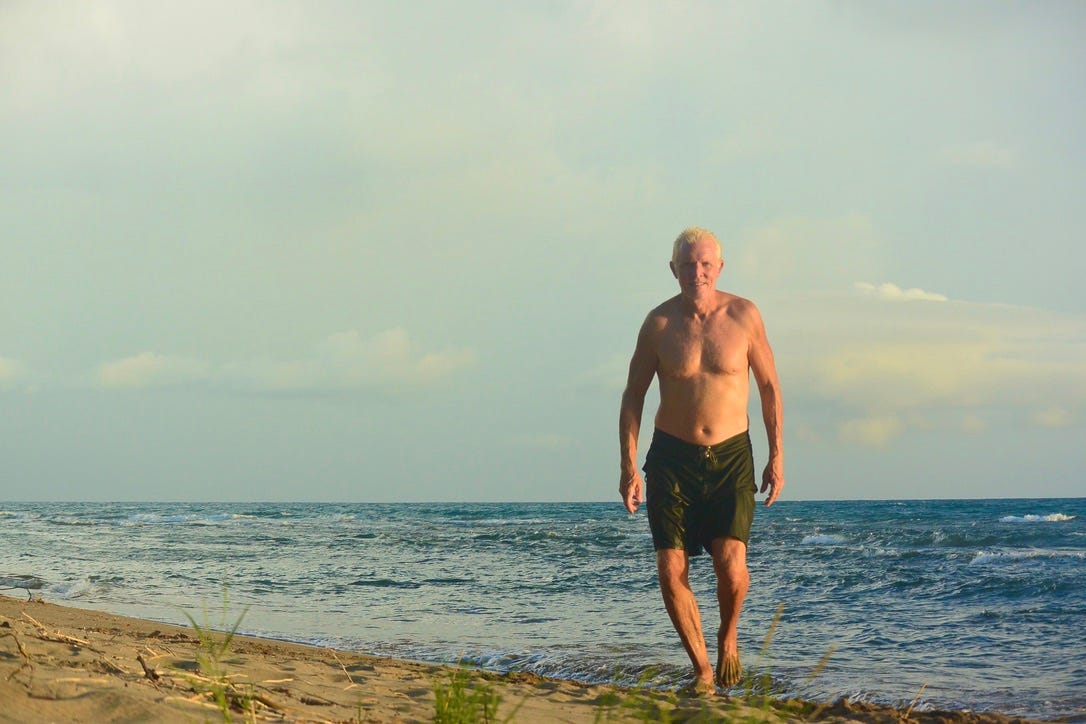
Here is an exercise truth, and I think I’ve been on this planet long enough to give my pretty accurate version of the truth. Taking care of your body is a lifelong endeavor. You start with the hand you're dealt (your genes) then you match the movement to what you need at that time. How you go about this is something that will change, depending on your needs and goals. The trick is to know when and how to change. It starts with thinking about exercise as training, rather than working out. Let me explain.
When I was in my early forties, a friend asked me why I always referred to my workouts as "training,” and what the difference was. It’s pretty simple. Training is about focusing on the process, less on the outcome. Whereas “working out” is often just a means to an end, something on a to-do list designed to garner a specific physical outcome, like six-pack abs or a big calorie burn. Nowadays wearable technology can overly support this idea, in my opinion. While rings and watches are useful for data and feedback, and to keep you on track, they can make exercise even more of a check-the-box experience.
I have been training for forty-eight years. When I was younger, it was to be as physically fit as possible for the sports I played, specifically soccer, basketball and baseball.
But as life changed and my body changed, and started to collect wear and tear I had to pivot, and figure out how to train for the life stage I was in. Here’s what that looked like, then and now.
Age 14-22 - Training's purpose was always the sports I played. Being fit was the natural and inevitable outcome of a regimen designed by my coaches to make me leaner, faster, stronger, and more powerful. I was playing multiple sports and each required different strengths. Soccer, for example, means serious endurance, while explosive lower body strength was essential for basketball. I was the captain of three varsity sports in high school, and the combination of these different types of sessions made me total-body fit. In essence I was cross-training.
Growing up in the rolling hills of Bucks County in Pennsylvania on a wooded property in Solebury made me a runner by nature. I built a powerhouse cardio program in high school when I learned about Fartlek training as well as the great Finnish runner Lasse Virin. He believed in running in the woods because he thought it sharpened his mental focus, running hills, following trails, jumping trees and streams and changing direction, which forces you to quickly change your pace and speed. The woods were my second home, and I followed his lead.
I was also a collegiate soccer player with a heavy off season training regiment. A ton of running, of course, but the game also requires a fair amount of twisting and turning from the trunk, so I put a heavy emphasis on core work.
I also worked with lighter weights for my upper body, and mostly avoided heavy weights; I found that when I was too big I became slower and more injury prone. My upper body strength primarily came from a mix of calisthenic exercises. Pull ups, tricep bench dips, back-ups and a heavy concentration on multiple kinds of push ups. My family's property provided the rest of the functional training, as I was often dispatched to chop wood, move downed tree trunks and other outdoorsy stuff that young fit guys can do.
When I look back though, it was the core work that set me up for the most success later in life–and had the greatest impact on my overall performance.
Age 22-39
I started my professional career as a high school athletic director, coaching multiple sports and later a college basketball coach. I introduced the teams to the training I had done. I wanted them to build cardio endurance, get stronger and do agility exercises that fit their various positions–and keep them injury-free. I also continued my soccer career, playing club ball throughout this stretch. So a lot on my plate, and fitting in time to maintain my fitness was tricky at times.
I trained the same way as I had in my earlier years, focusing on cardio, core and calisthenics for strength, but by the age of twenty-seven I had two full time jobs, as an educational consultant and college basketball coach. I was single, but there wasn't enough time in the day, and I couldn´t be as consistent. Somehow I managed and prioritized as best as I could and kept up a solid fitness level. I found time for a run even if it meant running with my team, would steal some time at the university's gym and made sure that my weekends had two big training days. I had to be more strategic with training, and it only allowed for a smidge of socializing.
At this time of my life I never thought about training as something to control my weight, or that it would help with health issues and avoiding disease. I knew it made me feel good and boosted my energy. That there was a high that I got from it. It didn't occur to me that the reason I slept so well was because I had trained so hard in the day.
Still, by my mid-thirties my body was starting to tell me something. I was getting more nagging injuries as a result of soccer, and recovery was slow. I didn’t want to believe my body was changing, that the wear and tear of many years was catching up with me silently. I wasn't listening.
Age 39 to 59
Then things really changed. I retired from playing soccer. I got married, started a family, was more sedentary with a desk job as an educational consultant and had less time in the day for everything, let alone training.
But I still tried to keep up my old routine. I was on a run in the fall of 2001 when my back seized up. I could hardly walk but somehow managed to limp home. The next day I made an appointment with Dr. Richard Levandowski, a top Sports Medicine Doctor in Lawrenceville, New Jersey. It wasn't my back, it was my hip. I had the early signs of developing arthritis and there wasn't much cartilage left.
After a few sessions with him I knew I would have to change my approach to fitness. I asked him about yoga. Turned out he was a big believer in Hatha yoga, a practice he recommended to younger athletes to supplement their regular training.
This was the biggest change to my training to date, when I added strong strength based Hatha yoga to my life. This was a new kind of movement for me, for both my body and my mind. It was the first time I had added something that was a layered and complex discipline designed, and it helped me connect the dots between exercise, nutrition and sleep. It also brought me a greater understanding of mindfulness.
I became an avid practitioner of various styles and hung with the crowd. I combined this with an ever increasing calisthenic regimen, and the combination of the two gave my body exactly what it needed. Strength, length and more flexibility, while being kinder to my beaten up joints and hip flexors.
Combined with my core and calisthenics plus new cardio work (jumping rope) I had found what satisfied my needs. Yoga helped me stay strong and *long.
AGE 60+
These days training is my therapy and my salvation. It’s my fountain of youth. Sleep, rest and recovery plus good nutrition are the others. But when it comes to the details of my training, it’s truly about a robust and consistent program focusing on my core.
And there are many ways to build powerful core strength. I fold in regular yoga, swimming, walking, light weight training but I really focus a ton of attention on my midsection. For me that looks like a combo of Russian Twists, Criss-Cross, Boat Pose, Star Abs (Twist), Side Plank with mini pumps, Rope Climber Crunch, Reverse Crunch, Drunken Mountain Climbers ( Twist ), Plank Hip Twists, Jump Lunge Twist, Plank up Twist, Scissor Crossovers, Windshield Wipers, Lying down figure eights, Supermans, Swimmers and reverse plank are a few of my favorites.
They all work on stabilizing the spine, hip and pelvis and keep me upright. They are what has enabled me to move quickly, and to have explosive strength in my life, and most importantly as I have aged. I have no back trouble thanks to yoga and core work.
I feel total-body strong and engaged. While I have a few training-based regrets–I wish I had started a yoga practice when I was younger and had quit pounding the pavement earlier on. But there are plenty of things I wish I knew then that I know now. What’s important is that I’ve figured out what’s going to keep me active and powerful, now and later.
*NOTE “LONGER” MUSCLES:
While you can't actually stretch your muscles and make them longer, regular exercise and good nutrition helps lubricate your muscles and joints by supporting all the layers of tissue around the muscles. Think about it like you would the layers of lasagna: you need filling between them to create more space, bounce and flexibility.
ABOUT ME:
I was born in Bucks County, Pennsylvania in the United States, and was raised by two educators who instilled in me a curiosity about people and the world. They introduced me to the joys of traveling at a young age when Pan Am Airlines and TWA ruled the air.
I am a graduate of Guilford College in Greensboro, NC where I majored in history and political science. I am a lifelong educator who has been a history teacher, high school athletic director, college basketball coach, wellness advocate, and notably, an Educational and Career Consultant for over twenty-two years. I am well known on United States university campuses as a consultant, recruiter, interviewer, and coach, and have helped over 8,000 people achieve their professional goals.
I have conducted professional sessions at the Harvard Graduate School of Education, Columbia Teachers College, Brown University, Princeton University Teacher Prep, Duke University, and the Spanish Ministry of Education.
I was an athlete from the time I was a kid until I retired from competition at 39. Three high school varsity sports and a college soccer scholarship. I was a college basketball and soccer coach as well and I am a certified fitness trainer
I am a multiculturalist who has lived in the United States, Jamaica, and Mallorca, Spain, which has been my home since 2010. The MAC Report is the culmination of my travel and life experiences and, aside from being the first three letters of my last name, also represents who I am, where I am, and how I see the world right now: A Mallorcan, an American, and a Coach.
My passions include education, history, culture, world politics, travel, fitness, sports, yoga, food, and most importantly, being a father and dad to my beautiful daughter.
Thank you for this Ramya. See you in JA
I loved this post, Chris! Such a helpful reframe to think about training rather than 'working out'. I want to focus more on my health and wellness in the next year and will definitely be keeping your insights shared here in mind.